

Amalficore at Home: Citrus Scent, Hand-Painted Ceramics and the Lost Art of Tablescaping
As October light begins to fade across London, the home becomes a place of atmosphere. A table catches the last pale glow from the window; a ceramic vessel gathers warmth beside the fruit bowl; a fragrance moves quietly through the room, evoking a coastline that is many miles away.
This is where Amalficore at home becomes more than a summer aesthetic. The azure-and-lemon palette, hand-painted Italian ceramics and citrus-led scent profile offer a form of cold-weather escapism: a way to invite sunlight, conviviality and Mediterranean ease into the darker months.
The most successful interpretation begins with scent. Consider bergamot, bitter orange, lemon leaf, neroli, fig and coastal herbs before selecting the vessel or tableware. Then build the visual story around tactile surfaces, imperfect brushwork and the satisfying irregularity of objects made by hand.
At STANZA Artigiana, that sensorial relationship between fragrance and form is central to everything we create in our small wooden shed in North London.
Begin with a citrus scent story
Citrus fragrance is often treated as bright, brisk and exclusively summery. Refine the composition, however, and it can become considerably more nuanced.
Bergamot offers a softly bitter, elegant opening. Bitter orange introduces depth and pleasing complexity, while lemon leaf feels greener and more textural than a straightforward lemon accord. Neroli lends a delicate floral quality; fig brings a creamy, gently earthy note; coastal herbs suggest sun-warmed foliage, salt air and the aromatic character of the Mediterranean landscape.
For autumn and winter, balance citrus with a grounding note. Cedarwood, amber, fig, olive leaf or a restrained spice accord can prevent the fragrance from becoming too sharp. The result should evoke sunlight on a table after the sun has disappeared from the sky: luminous, but never frivolous.
STANZA Artigiana’s Amalfi Reed Diffuser offers a related interpretation, combining bergamot, freesia and pear in a 170 ml vessel made from 100% recycled glass. The diffuser is handmade in the UK, uses a sustainable vegan base and natural wood reeds, and is described by STANZA as offering fragrance for up to 12 months.
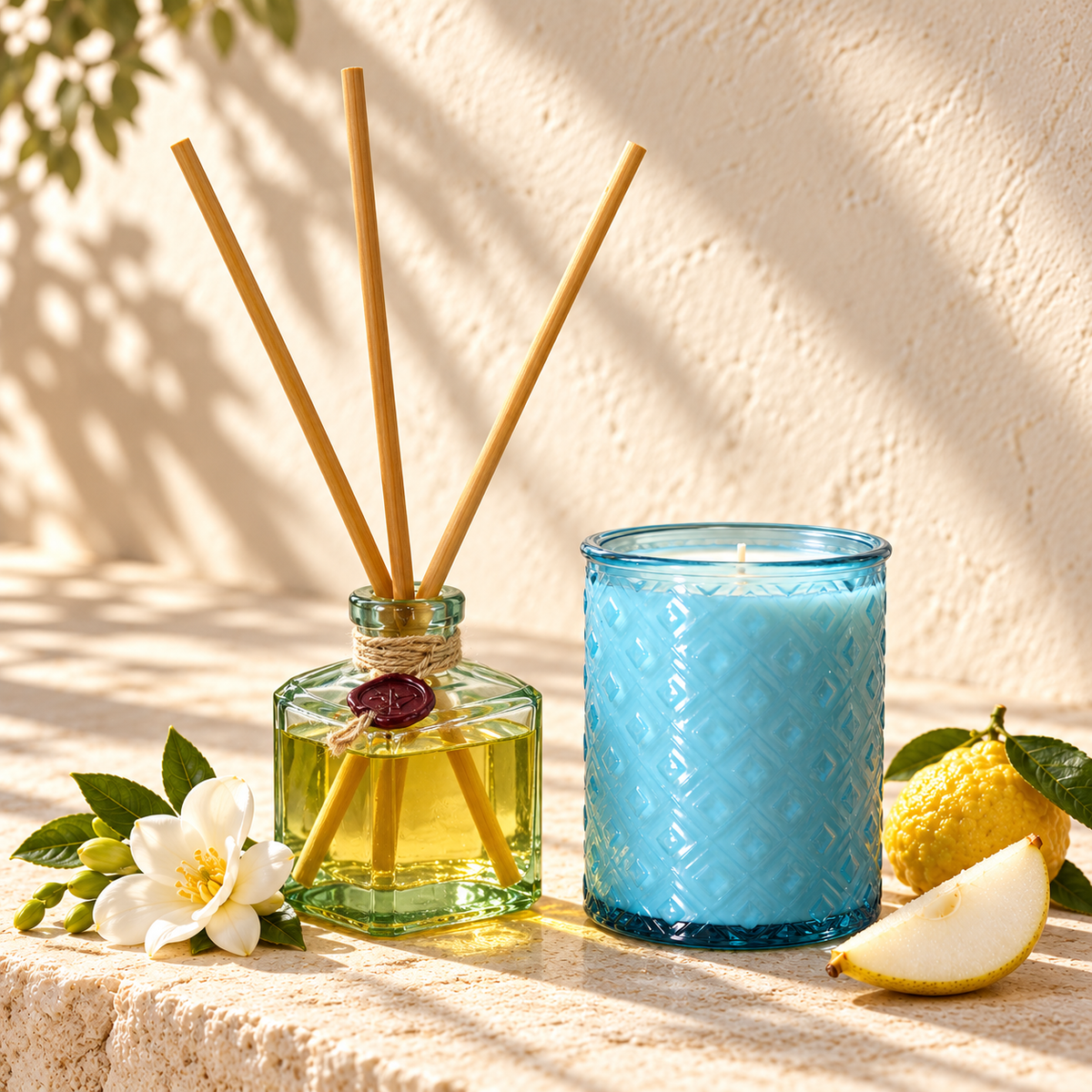
Layer fragrance according to the room
Place a reed diffuser where air circulates gently, such as near an entrance, on a console or at the edge of a dining room. Avoid positioning it directly beside a radiator, which can accelerate evaporation and overwhelm the fragrance.
For a dining table, favour a subtle diffusion rather than an intense throw. Keep the vessel at least 30 cm from plates and serving dishes, and turn the reeds only when the aroma begins to soften. Four to six reeds will usually create a considered presence in a medium-sized room; add more gradually rather than introducing all of them at once.
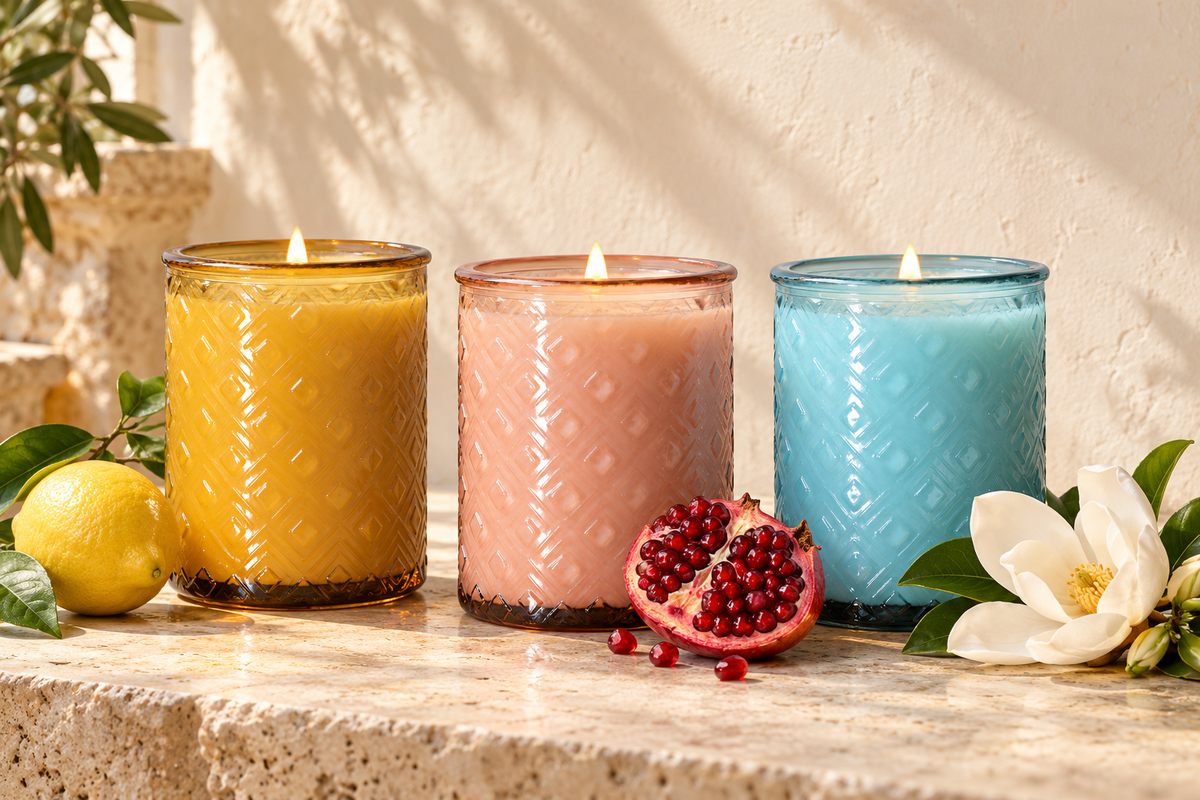
Use a citrus candle for an evening ritual, particularly before guests arrive. Allow a soy candle to burn for approximately 2–3 hours on its first use, or until the melt pool reaches the majority of the vessel’s diameter. Trim the wick to approximately 5 mm before each burn, and never leave a lit candle unattended.
Choose the vessel as the second half of the story
Amalficore depends upon the conversation between scent and surface. A citrus fragrance becomes more memorable when it is housed in a vessel that deserves attention after the fragrance has dispersed.
Look for azure, lemon yellow, terracotta, olive green and warm cream, but anchor these colours against a neutral base. A pale limestone wall, dark timber table or oatmeal linen cloth allows hand-painted motifs to feel expressive rather than excessive.
The current design conversation is moving decisively towards tactile materiality. Reporting around Cersaie 2026 has highlighted high-relief surfaces, visible irregularity and ceramics that invite touch as much as admiration. The most compelling pieces appear hand-formed, even when technology has been used in their production.
That distinction matters. A machine may reproduce a lemon motif, but it cannot replicate the quiet variation of a brushstroke, the softened edge of a hand-thrown form or the small deviation that proves an object has passed through human hands.
STANZA Artigiana’s ceramics collection and Italian reed diffuser vessels bring this principle into the home. Their visual language is joyful without being juvenile: vivid spirals, painterly marks and individual forms that feel collected rather than mass-produced.
Build a winter Amalfi tablescape
Tablescaping is not the pursuit of a perfect table. It is the art of creating an invitation: somewhere people instinctively want to sit, linger and share food.
Begin with a neutral foundation. Choose washed linen, natural cotton or a warm cream tablecloth, then introduce colour through ceramics and glassware. Layer azure and lemon yellow with terracotta, tobacco, burgundy or olive rather than relying on a purely blue-and-yellow scheme.
Follow this practical sequence:
- Ground the table with a natural textile or bare timber.
- Place one dominant ceramic element, such as a hand-painted serving platter or sculptural centrepiece.
- Add smaller motifs through side plates, espresso cups or individual bowls.
- Repeat one colour three times so the palette feels intentional.
- Introduce fragrance through a reed diffuser placed beyond the immediate dining zone, or through a candle positioned safely on a stable, heat-resistant surface.
- Leave generous negative space around serving dishes and place settings, allowing the objects to breathe.

For a compact London dining table, select one centrepiece no taller than approximately 30 cm, ensuring that guests can see across the table. Use low ceramic bowls filled with lemons, clementines or walnuts, and add a few clipped branches of rosemary, olive or eucalyptus for height and aroma.
Avoid scattering citrus motifs across every surface. One or two graphic pieces will garner more attention than a table overwhelmed by pattern. Let the contrast between rough linen, polished glass, painted ceramic and dark wood create the visual rhythm.
Pair hand-painted ceramics with natural fragrance
The most accomplished Amalficore interiors unite sight, scent and touch. A glossy painted ceramic may provide colour; a reed diffuser supplies continuity; a candle introduces the flicker and warmth that tablescaping alone cannot achieve.
For a hospitality setting, consider placing a ceramic diffuser in the reception area, a citrus-and-wood candle in the lounge and a quieter fig or neroli composition within guest rooms. In a wedding or event setting, use scent sparingly and consult the venue’s flame policy before introducing candles. Reed diffusers offer a dependable alternative where open flames are not appropriate.
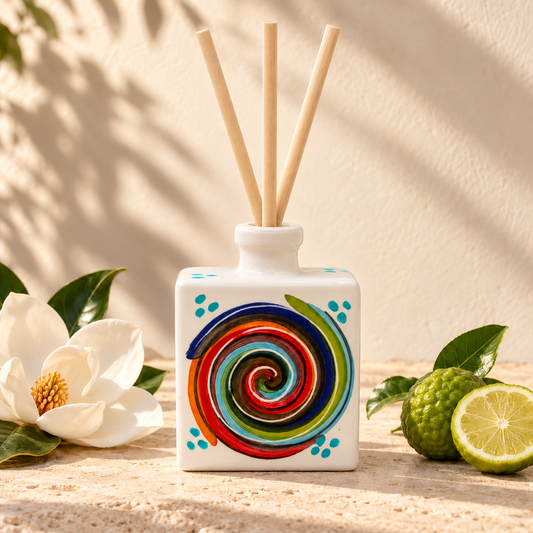
For interior designers and boutique hotels, this approach creates a cohesive sensory identity. The vessel becomes part of the styling scheme, while the fragrance reinforces the emotional character of the space. A hand-painted diffuser on a bedside table or restaurant console should appear considered even before its aroma is noticed.
Select craftsmanship over uniformity
Amalficore is at its most sophisticated when it resists over-styling. Choose pieces with evidence of their making: an uneven glaze, a raised motif, a brushstroke that is not perfectly replicated or a silhouette that carries the warmth of the maker’s hand.
This is precisely where STANZA Artigiana’s approach differs from decorative imitation. Our candles and Italian reed diffusers are produced in small batches, while our handmade ceramics retain the individual character that makes an object feel personal. The design is not applied merely to decorate a room; it is intended to become part of the room’s emotional architecture.

Our bespoke candle creation service enables brands, interior designers, boutique hotels, wedding planners and private clients to develop a fragrance and vessel around a particular story. Select recycled glass, handmade Amalfi ceramics or a supplied vessel, then refine the scent through samples before small-batch production. Typical production takes 3–4 weeks from final approval, with a minimum order of 10 candles.
For a brand or event, an Amalfi-inspired scent might combine bergamot, lemon leaf and neroli with cedarwood or fig. For a winter wedding, bitter orange and amber could create a more enveloping atmosphere. For corporate gifting, azure packaging and a citrus-led fragrance can offer a distinctive expression of place, hospitality and optimism.
Extend the story through refills and workshops
A considered home should not be disposable. STANZA Artigiana offers a refill service for candles, allowing a much-loved vessel to return to use rather than become a one-season object. Our candles are made with natural soy wax, and we plant one tree for every candle purchased.
You can also carry the Amalfi sensibility into an experience. During a London candle-making workshop, participants explore fragrance, blend their own scent and create a candle with expert guidance. The format is suitable for private celebrations, creative team-building sessions and corporate events that seek something more memorable than a conventional activity.
For larger gifting programmes, explore corporate gifting or begin with our candle collections. If your project requires a more tailored conversation, contact STANZA Artigiana to discuss scent development, ceramics, packaging and production.
Amalficore, approached with restraint, is not a costume for summer. It is a winter language of colour, craft and conviviality: citrus brightness against English grey, hand-painted ceramics beside candlelight, and an atmosphere that makes an ordinary table feel quietly transported.
Create the scent. Curate the colour. Set the table with intention.
Ordinary interiors need not apply.